

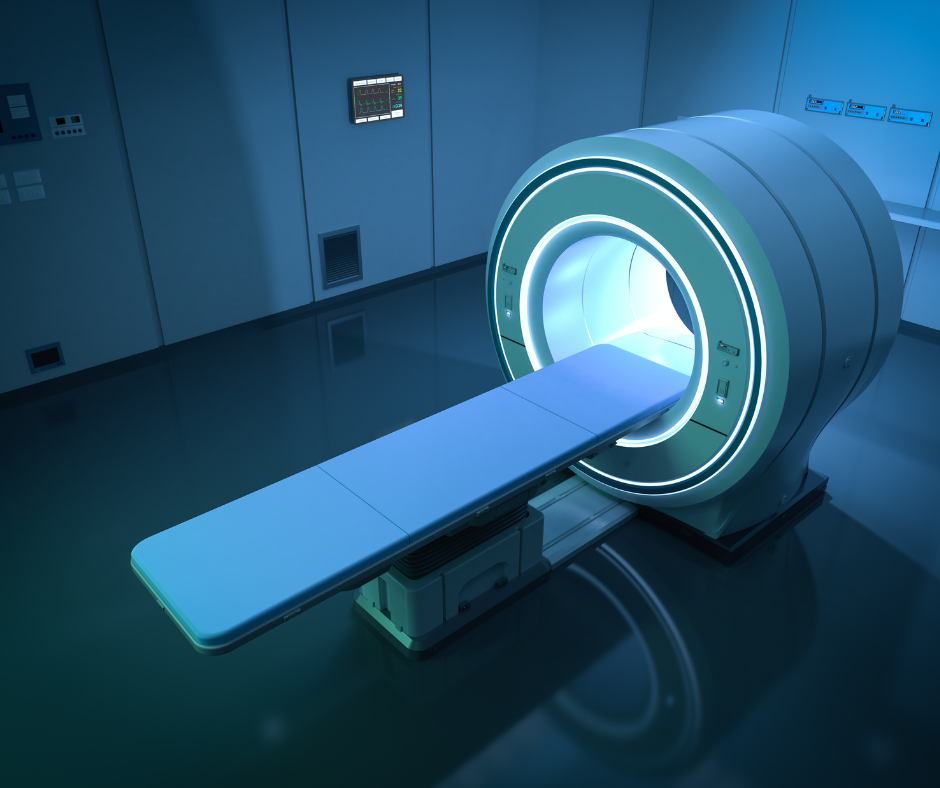
THE MOST MODERN AND COMPREHENSIVE IMAGING OF THE HEART MUSCLE
Cardiac Magnetic Tomography (CMR) is a cornerstone of modern cardiology. It is an examination without harmful radiation for the patient and uses a safe paramagnetic substance, gadolinium, without the risk of nephrotoxicity that accompanies iodinated contrast agents.
What makes Cardiac Magnetic Resonance Imaging stand out?
First of all, Cardiac Magnetic Resonance Imaging has the highest accuracy in determining cardiac morphology and function, information essential for determining the correct treatment of cardiovascular patients.
Furthermore, it has the highest sensitivity, as well as specificity, of any other non-invasive method for evaluating a significant coronary artery disease for the patient (90% sensitivity, 90% specificity). This practically means that it gives almost absolute certainty to the treating physician as to whether or not the patient suffers from significant stenosis of the vessels that supply blood to the heart.
Finally, it is the only, bloodless imaging method that offers characterization of the heart muscle at the tissue level, making it an essential examination in the investigation of all cardiomyopathies.
Who is this examination for?
Cardiac Magnetic Resonance Imaging is intended for all patients with a possible cardiovascular problem.
In fact, according to scientific research, Cardiac Magnetic Resonance Imaging has an effect on the patient’s treatment in 60% (!) of cases.
With the use of modern machines with a wide diameter, as well as with the help of supporting tools, such as music during the examination, it becomes possible to examine even patients with severe claustrophobia.
It is also important that under certain conditions, all newer implantable pacemakers and defibrillators can safely enter the MRI scanner.
What are the applications of Cardiac Magnetic Resonance Imaging?
Cardiac Magnetic Resonance Imaging has been described as a “one-stop-shop”. The reason is that the information it provides is so extensive that it can be used in almost all cardiovascular diseases! Specifically:
- Dynamic CMR with pharmacological fatigue for the diagnosis or control of coronary artery disease and guidance of invasive myocardial reperfusion.
- Evaluation of myocardial vitality and decision to perform coronary angiography. Checking the distribution of coronary artery disease before open-heart myocardial reperfusion surgery (bypass).
- Dilated cardiomyopathy for accurate assessment of the functionality of the left and right ventricle. Finding the etiology of myocardial damage.
- Hypertrophic cardiomyopathy. Etiology and risk assessment of arrhythmia. Examination of first-degree relatives.
- Restrictive cardiomyopathy. Accurate study of myocardial deformation.
- Toxic cardiomyopathy. Diagnosis and follow-up in patients under or after chemotherapy.
- Inflammatory Diseases of the Myocardium. Diagnosis and follow-up.
- Pericardial Diseases. Evaluation of inflammatory disease, finding cysts or pericardial tumors.
- Congenital heart diseases in children, adolescents and adults for diagnosis, monitoring and guidance of rehabilitation therapy.
- Aortic diseases for chronic monitoring of aortic dissection, dilatation and aneurysm with or without the use of contrast.
- Annual screening of young patients at increased risk of aortic disease (e.g. Marfan disease, Ehlers Danlos, etc.) with the aim of avoiding the patient’s continuous exposure to harmful radiation, as is done with CT scanning.
- Valvular diseases (aortic, mitral, pulmonary and tricuspid valves). Accurate assessment of valvular insufficiency.
- Cardiomyopathies in storage diseases (e.g. Fabry, amyloidosis).
- Cardiomyopathies in systemic diseases (e.g. systemic lupus erythematosus, sarcoidosis, muscular dystrophies).
- Finding possible arrhythmogenic foci to guide an invasive ablation of a ventricular arrhythmia.
- Benign and malignant tumors of the heart, as well as heart clots.
Cardiac Magnetic Resonance Imaging is a very powerful “weapon” in the quiver of cardiologists for the optimal treatment of their patients and enables improvement of the course of the disease in many cases.
The only accredited CMR center in Cyprus by European Cardiology Society (EACVI CMR Center Accreditation).